Some residents at the
condominium pay over $800 a month in homeowners association
fees, which has increased year after year. Some residents
said they could not afford higher payments, including
upcoming reserves
Condos have new financial requirements, and homeowners could
feel it in the wallet. Florida is requiring all condo
associations with three-story buildings or higher to file an
inspection report that focuses on different parts of a
building and the expected cost to renovate or maintain them.
The structural integrity reserve study is due by Dec. 31, and then every 10 years, said Carolina Sheir, partner at Hollywood-based Eisinger Law.
|
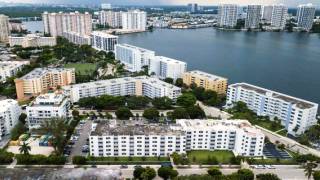
Aerial view of the Caribbean Breeze Condominium in Sunny Isles Beach |
Now, the state will prohibit waivers and
require communities to fund repairs.
Here are the steps to meet the upcoming deadlines:
Commission a study
-
Step 1: Condo associations must commission a structural integrity reserve study.
Update the condo budget
-
Step 2: Once the inspector returns the report, the condo association must adjust the budget. The budget has to account for monthly contributions toward a reserve sufficient to pay for renovations and upgrades every 15 to 25 years.
Notify owners and file with the state
-
Step 3: The next phase happens in two steps. The association must notify and share with every owner the inspector’s structural integrity reserve study and the revised budget. If the association has a website, it must post the report online. At the same time, the association must file the report to the Florida Department of Business and Professional Regulation. Both steps must be completed within 45 days.
Contribute to the reserves
-
Step 4: Now comes reserve contributions.
For budgets adopted on or after Dec. 31,
condo associations that have a structural integrity reserve
study must start reserve contributions in 2025. That’s in an
ideal world, Sheir said, but reality differs for many
associations. For those stuck on a waiting list with an
inspector, in the process of an inspection, planning to
complete their milestone inspection in 2026 or simply
desiring to reduce the expected reserve amount, Sheir said,
there’s a process to waive payments one last time. Before
Dec. 31, the association would have to call a vote and gain
the approval of a majority of all owners to waive until
2026. So, for example, if a condominium has 100 condos, the
association needs 51 owners to waive the contribution
requirements. Owners must receive notice of a membership
meeting to vote on the waiver of reserves at least 14 days
in advance, and the vote — and decision to waive — must be
recorded in the minutes of the meeting. It may be tempting
to forgo reserve contributions. Condo owners face zero
penalties from the state, at least for now. State Rep. Vicki
Lopez, R-Miami, said during a Miami Herald a real estate
panel in September that she and other lawmakers intended to
approve penalties next year for condos that don’t meet the
new requirements.
Other factors in delaying reserves
Still thinking about delaying reserve contributions until
2026? Sheir said there’s other factors to consider.
Lenders and insurance companies review condo associations’
financial documents when making a loan or when issuing or
renewing policies. Should an association choose to delay
reserve contributions to 2026, loan requests or insurance
policies may be rejected or come at a premium with higher
interest rates and costs because companies may want to
protect themselves against taking on more risk.
“Having reserves is becoming very important for the
financial welfare of associations,” Sheir said, “and being
looked at closely by insurance companies and lenders.”
But it all comes down to this: Condo owners will have to pay
more to remain living in the same building. Reserves will
kick in, whether associations choose to start in 2025 or
2026.
It’s a financial burden many fear, with wages falling short
of the cost of living and others, including retirees,
struggling with tight budgets.