A Florida judge
ordered a developer to restore the Biscayne 21 condominium
in Miami, FL, to a habitable state.
A Florida developer, forced to make millions of dollars in
repairs to a Miami condo building, has filed a lawsuit
against its residents.
|
Biscayne 21 Condominium Association going through legal battles between owners and developers |
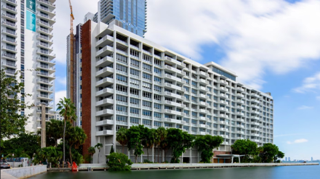
TRD Biscayne owns 183 of the building’s 192 units. The remaining units are held by residents who have refused to sell.
If the court grants the requested termination, those holdout owners could be forced to accept the developer’s buyout offer.
The company is seeking what Florida law
calls an “economic termination,” a legal mechanism that
permits the dissolution of a condominium association when a
building has sustained significant damage and restoration no
longer makes economic sense.
In a statement to Realtor.com®, Two Roads Development
managing partner Taylor Collins said, “We continue to comply
fully with all court directives and to follow the governing
documents. The equitable termination petition asks the court
to address the current condition of a building that has
suffered from decades of deferred maintenance and systemic
infrastructure failure. Independent assessments have
demonstrated that restoration would require extraordinary
investment well beyond the value of the structure itself. We
believe the equitable process allows the court to reach a
fair and realistic resolution.”
Meanwhile, the Miami Herald reports that residents of
Biscayne 21 filed a separate amended complaint earlier this
week, seeking at least $100 million in damages from banks
that financed the project, companies tied to the developer,
and individuals involved in the attempted takeover.
Details of the previous ruling
In a Jan. 12 order, Miami-Dade Judge Thomas Rebull sided
with eight residents who sued to block the sale of the
Biscayne 21 condo building, directing the defendants—Two
Roads Development and its affiliated entities—to restore the
apartment tower and the plaintiffs' units "to the condition
they were in at the time the complaint was filed in May
2023," according to a court filing obtained by Realtor.com.
After the January ruling, attorney Glen H. Waldman, with the
law firm Armstrong Teasdale, who represents the holdout
condo owners, told Realtor.com that engineers who had
recently assessed the building found that the structure
remains sound and can be restored, but it was expected to
cost the developer a "substantial" sum.
"But they should never have gone ahead and got over their
skis like they did before they had absolute certainty that
they had a right to do what they did," said Waldman.
Besides fully rehabilitating the building to make it livable
again and restoring plumbing and electrical wiring to allow
utility services to resume—all at Two Roads' expense without
any financial contribution from the residents—the developer
was barred from terminating the condominium, or seeking any
zoning approval or demolition permits, according to the
January ruling.
"The outside windows are gone, there is no air-conditioning
system for the building. ... I mean, everything's gone,"
said Waldman. "It's a skeleton."
The judge's January order came three months after the
Florida Supreme Court declined to hear an appeal filed by
the developer, allowing a July 2025 ruling by the Third
District Court of Appeal that sided with Biscayne 21's
owners opposing the building's demolition to stand.
Realtor.com reached out to attorney Susan Raffanello, who
represents Two Roads Development, and the attorney for the
condo residents for comment.