|
Article Courtesy of
The Realtor
By Julie Taylor
Published July 2, 2026
|
Homeowners at a townhome complex in Homestead, FL, are
taking the developer of the complex to court for allegedly failing to
transfer HOA control over to the homeowners.
|
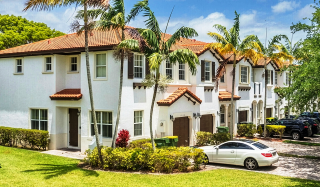
In fact, homeowners in the Villa
Portofino East complex—which consists of 117 townhomes—claim
that the developer has been in control of the HOA for 20
years after the units were sold, collecting dues from
residents but holding an iron grip on the HOA's governance.
Control and decision-making authority over Florida
residential communities governed by associations are
supposed to transfer from the developer to the homeowners
once the statutory turnover requirements have been met.
But affiliates of developer Prime Homes at Villa Portofino
East—tied to developer Larry Abbo's Prime Group and PMG
Asset Services—have appointed their representatives and
employees to the HOA board for the past two decades,
according to the lawsuit filed in Miami-Dade Circuit Court
last month by residents Edney Del Risco, Eliseo Moreno, and
Madeline Garcia.
The developer-controlled board and its attorneys have
reportedly told homeowners that the requirements for
transferring control of the association have not yet been
met.
|
|
The legal saga at Villa Portofino East has rocked the
quiet, upscale townhome community in Homestead.
|
However, Risco, Moreno, and Garcia—who have co-owned a
townhome at Villa Portofino East since 2022—strongly disagree.
"They are not the only owners in the community with these concerns; they are the
ones who chose to file," their attorney, Eduardo Gomez, tells Realtor.com®
Under Florida's Homeowners' Association Act, homeowners
become entitled to elect a majority of the association's board within three
months after 90% of the parcels in all phases of the community ultimately
operated by the association have been conveyed to members or other owners who
are not affiliated with the developer.
Risco, Moreno, and Garcia allege that the developer-controlled HOA improperly
included transferred land in its calculation of residential parcels to delay the
turnover of control to homeowners.
On June 26, 2024, the Villa Portofino East Community Development District
transferred two parcels to Prime Hotel Group at Homestead, LLC, according to the
lawsuit.
Although those parcels are now slated for commercial use as the site of a new
hotel, the HOA allegedly continues to count them as residential parcels when
calculating whether the statutory threshold for homeowner control has been met
or not.
"The developer now appears to treat the same parcels two different ways,
depending on which calculation favors it: residential when that helps prolong
developer control of the HOA, commercial when that helps justify the hotel
expansion," says Gomez.
That alleged dual treatment is part of what the lawsuit seeks to challenge.
"Our position is that the developer has manipulated the parcel count through a
series of post-closing land transfers to keep itself artificially below the
threshold for nearly two decades," says Gomez. "The math, as we read it, does
not support continued developer control."
Lawsuit also raised maintenance issues
The lawsuit also alleges that the developer-controlled HOA has failed to
adequately maintain the complex.
"The complaint identifies inoperable access gates; an unsafe pool, fountain, and
pergola; broken paver walkways; fence damage; and degraded stormwater
infrastructure, among other items," says Gomez. "The Association is obligated to
maintain these features under the governing documents—the residents are the ones
funding it through their assessments."
The HOA monthly assessment was $285.05 going into 2026, according to Gomez, but
was reduced to $252.51 in April.
HOA turnover problems persist
Florida attorney Chad D. Cummings of Cummings & Cummings Law, who is not
involved in the case but has examined the situation, tells Realtor.com: "The
developer turnover process fails more often than most people realize. This was a
major problem during the 2008–09 downturn when many developers went bankrupt,
creating 'zombie HOAs,' and the issue is starting to rear its head again."
Cummings says turnover should be measured in months or years, not decades.
"The longer a developer holds control, the more financial risk accumulates for
homeowners," he says. "There is an inherent conflict of interest between
developers who want to minimize expenses to maximize their ROI and homeowners
who desire that funds are expended to maintain the community and protect future
resale value and ensure amenities and infrastructure are maintained."
When the developer turnover process breaks down, Cummings says the obvious risk
is the effect on property values.
"Whenever we are dealing with a zombie HOA, property values will take a hit," he
warns. "Knowledgeable buyers will run in the other direction."
Realtor.com reached out to PMG's attorney, Geoffrey C. Bennett, but did not hear
back. |