|
Article Courtesy of
Suncoast Searchlight
By Derek Gilliam
Published March 10, 2026
|
Some homeowners say the negotiations were conducted with too little transparency
and fear the deal gives the developer too much control over land long seen as
the heart of the community
|
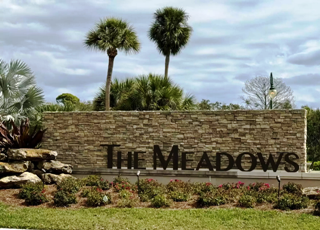
A plan to lease hundreds of acres of golf
courses and green space in The Meadows to Benderson
Development Co. for nearly 50 years has sparked a lawsuit
over the future of one of Sarasota’s oldest and largest
communities.
The Meadows Community Association board voted 6-3 last month
to authorize its president to sign the contract. The deal
would transfer control of 500 acres — including three,
18-hole golf courses and vast expanses of open space — to a
subsidiary of Benderson Development, which owns and operates
the nearby Mall at University Town Center.
The lease comes after years of operating losses pushed the
country club into bankruptcy and forced two of its courses
to close. Under the deal, Benderson would pay off the
mounting debts and work to reopen the courses.
But the agreement has divided residents.
Some homeowners say the negotiations were conducted with too
little transparency and fear the deal gives the developer
too much control over land long seen as the heart of the
community.
One of them, Donald Breece, filed a lawsuit arguing the
contract goes far beyond a simple golf lease. Instead, his
suit says, it allows long-term and potentially permanent
changes to the land that defines the 3,500-home community
without a vote of property owners.
|
|
A lawsuit filed by Meadows Community Association
director Donald Breece seeks to require a community-wide vote on the
Benderson contract. The association’s master board approved the deal
Feb. 12.
|
Under the terms of the agreement, Benderson must operate the golf courses for
three years. After that, the company could walk away following potentially
irreversible conservation easements having been placed on the property. The
contract also allows Benderson to convert portions of the property into wetlands
to generate mitigation credits.
Some Meadows residents also worry the land could become tied to a special taxing
district Benderson is seeking to establish at UTC. The new district could
potentially hold the easements on the community’s land.
The lawsuit argues the agreement effectively transfers control of the land to a
commercial real estate company whose primary business is large-scale retail and
mixed-use development, not golf. In Breece’s view, that amounts to a de facto
sale that should require a vote of all property owners.
|
The dispute is the latest example of
tensions playing out in older Florida communities built
around golf courses that are no longer profitable. Across
the region, homeowners associations have struggled to
maintain aging courses as participation declines and
operating costs rise.
Circuit Judge Dana Moss denied an emergency motion Feb. 12
seeking to block The Meadows Community Association from
approving the contract. Court records show association
President Chris Perone signed the contract the next day.
Lawyers representing the board argue Breece’s suit is now
moot because the contract has been signed.
But the case is not over. Moss could still decide whether
the agreement required a vote of all property owners — one
of the key claims in Breece’s lawsuit, which seeks
additional relief.
When contacted by Suncoast Searchlight, Perone declined to
discuss specifics, citing the pending litigation. But he
said opponents have mischaracterized the agreement.
“Whatever they tell you is speculation and opinion,” he
said.
Todd Mathes, director of development for Benderson
Development did not respond to text messages seeking
comment, and multiple phone calls to the company were not
returned.
|
|
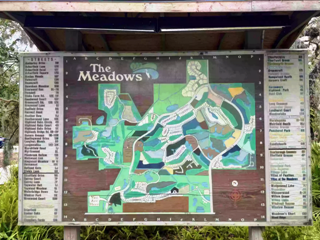
The Meadows was developed in the mid-1970s as one of
Sarasota County’s first planned-unit developments. The property
encompasses more than 1,000 acres mostly west of Honore Avenue and
north of 17th Street.
|
Breece, who is also a dissenting member of the community association board,
declined to speak on the record. His attorney, Steven Hutton, said the case
remains active and that an HOA election scheduled for March 31 could tilt
momentum.
If the judge rules in Breece’s favor, then the deal could be unwound, or at a
minimum, the lease could head to a community vote.
“At this point,” Hutton said, “we’re considering all the options.”
From golf haven to financial strain
More than 50 years ago, British developer Frank Taylor, founder of London-based
real estate company Taylor Woodrow, set out to build a different kind of
community.
He had been looking to expand his construction empire, eyeing the property in
northwest Sarasota County as one of his first forays into American development.
He began developing The Meadows in the mid-1970s on former ranchland west of
Honore Avenue and north of 17th Street, pitching the community as a lifestyle
built around golf, nature and outdoor living. Early marketing promised residents
they could “live where you play.”
Over time, the community grew into one of Sarasota’s largest, with about 3,500
homes, three 18-hole golf courses, 100,000 square feet of commercial space and
hundreds of acres of green spaces woven through the neighborhood. More than
5,000 people now live in The Meadows.
Jim Laidley remembers visiting his parents in their Meadows residence in 1985,
back when parts of Honore Road still weren’t paved. He said in the early days,
the course was public and anyone in The Meadows could play.
In the early 1990s, as development of the community was winding down, property
owners purchased the golf courses and turned the club into a private operation.
For years, the agreement appeared stable, but by the mid-2010s, declining
participation and rising costs began to strain the aging golf community.
Golf memberships had dwindled to about 300 — about a third of what it had when
the club was taken private, and the facilities were in drastic need of an
update.
From 2014 through 2017, the course lost more than $1 million a year, Laidley
said. The Meadows Community Association bought the property for $6 million in
2018, wiping out its debt and leasing it back to the country club for $10 a
year.
The final blow came in July when the country club declared Chapter 7 bankruptcy
and shuttered all three golf courses. One of the courses has since reopened.
Susan Chapman, a former city commissioner and director of The Meadows Community
Association, said the board first tried to find a traditional golf operator. But
none were willing to invest given the club’s financial troubles and immediate
need for upgrades. The terms offered to those golf operators differed
substantially from the Benderson lease, she said.
“It was an impossibility because how could you have a return on investment when
they (the courses) led to bankruptcy twice?” she said. “And still have money for
the clubhouse.”
Chapman was one of the three MCA directors who voted against the Benderson deal.
Like Breece, she said she believes such a large decision should be put to a
community vote.
She told Suncoast Searchlight that Benderson publicly became involved in August
when the company submitted a letter of intent to the board.
In the letter, Benderson promised to operate some of the golf courses and come
up with a plan to redevelop the struggling property. The company also included
language for conservation easements.
Months of back-and-forth negotiations followed, culminating in a 49-year lease
that critics say gives too much power to one of the region’s most influential
developers.
“I think it’s too complex,” Chapman said of the deal. “There’s so much in it
that you discover something new every day.”
Residents opposed to the Benderson deal say the process has been rife with
controversy and secrecy. Chapman, who was appointed to the board in April, said
she was presented with a three-page non-disclosure agreement that she refused to
sign upon joining the board.
Since then, she said, information about the community’s finances has been
difficult to come by.
Richard Sommerfeld, another resident of The Meadows opposed to the Benderson
lease, said that since the MCA bought the property, the association has already
spent $18 million rehabbing and sustaining the country club.
The bankruptcy “was a surprise to a lot of the residents because the MCA never
disclosed to the rest of the residents what the true financial shape of the
country club was,” Sommerfeld said.
Inside the Benderson deal
As part of the Benderson agreement, the developer would lend the Meadows
millions of dollars to pay off the property’s existing debt and refinance that
debt at a 4.5% interest rate.
The deal provides for an initial three-year term where Benderson must operate 36
holes across two courses and mow and maintain the third course. Benderson must
decide by the end of September whether to open that course.
Within the first nine months of the lease, Benderson also must decide whether to
convert portions of the property into wetlands through a clause in the lease
titled the “Conservation Easement Option.”
If the company goes that route, $3 million would be cut from the community’s
refinanced debt and the interest rate would drop to 3%.
At the end of the three-year term, Benderson could extend the lease for another
10 years after submitting a redevelopment plan for the golf courses and paying
rent of $50,000 per year. The contract has four 10-year extensions.
Susan Schoettle, a former assistant county attorney who’s been involved in
land-use for more than 35 years, outlined the proposal to a gathering of Meadows
residents last month and warned the deal concentrates too much power in one
company.
“You’re going to end up with Benderson being your banker, your tenant, golf
course operator, planner for golf course redevelopment and likely holder of
easements controlling the use of 500 acres of MCA golf course land and open
space,” she told concerned residents days before the lease was signed.
Schoettle said the lease provides residents little leverage. If Benderson
submits a redevelopment plan, the MCA has just 30 days to review and provide
comments — not enough time, she said, to conduct engineering studies and assess
potential impacts.
The lease also requires Benderson to maintain a “high-quality golf course,” a
term she said is subjective.
“You ask five different golfers, and I’m sure you’ll get at least seven
different versions of what a high-quality golf course is,” she said.
She added the lease does not require Benderson to implement any of the
community’s suggestions, giving residents what she called only the illusion of
control.
Finally, Schoettle noted that if Benderson decides in its redevelopment plan to
convert golf courses to open space, that land would be eligible for conservation
easements.
That could benefit the development company in its pursuit to build in other
areas — using the mitigation credits it gained in The Meadows deal to offset
environmental requirements tied to other projects. Schoettle said that seems
like an “inherent conflict of interest.”
While a for-profit company like Benderson cannot hold conservation easements
under Florida law, Schoettle said a new special improvement district that
Benderson has lobbied for at UTC could.
Benderson would control a majority interest in the proposed UTC Improvement
District, according to previous Suncoast Searchlight reporting.
Christine P. Johnson, president of the Big Waters Land Trust, independently
reviewed the lease and told Suncoast Searchlight the conservation easements were
“grossly undervalued.” She said she didn’t understand why any property owner
would give up property rights without knowing who will ultimately hold those
rights.
She pointed to the Whole Foods development at the corner of Honore and
University Parkway as an example of how land once set aside for mitigation can
ultimately be bulldozed and paved over.
“Mitigation lands can be developed,” she said, “as it was with Whole Foods.”
‘A one-sided deal’
On a recent Thursday morning, the lone operating golf course in The Meadows had
a half full parking lot.
Retirees walked their dogs down a trail path, seemingly unconcerned about the
debate raging among their neighbors. While many residents interviewed by a
reporter were aware of the deal, few said they followed the details closely.
Don Caccavo, owner of the Italian restaurant Mona Lisa in The Meadows Shopping
Village, said he doesn’t like large real estate companies that exert the level
of control that Benderson has come to wield in Sarasota. He noted that Benderson
owns many of the most valuable retail locations in the county, and that it has
driven up rents at some of its properties.
“I’m not a fan of companies who want to take over a whole town,” he said.
But he would be open to any deal that improves the golf course and brings more
customers to his business.
Denny Harton, who was golfing on Thursday at The Meadows golf course, said he
believes less than a quarter of The Meadows residents have been paying
attention. He said the current board was “in over their head” negotiating with
Benderson leading to a deal he could not support.
“I think there could be a deal with Benderson,” he said. “But the deal we
entered into is a one-sided deal.”
|