Florida property insurance experts cautiously
optimistic ahead of hurricane season
And as with every hurricane
season, it only takes one storm to upend years of work that
industry officials say helped attract 20 new property and
casualty insurance companies with more than $850 million in new
capital into the state’s market. |
|
Article Courtesy of News Service of Florida
By Jim Turner
Published June 3, 2026
|
WATCH VIDEO |
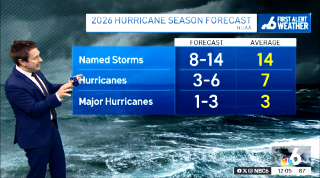
A "below-normal" year for storms could further a
positive trend for Florida's insurance market, industry experts contend.
But because of Florida’s location between the Atlantic and Gulf,
homeowners will always be at risk, which will temper any potential
reductions to premiums.
|
Heading into the Atlantic storm season
that begins June 1, insurance experts said legislative
reforms in 2022 and 2023 targeting “frivolous” lawsuits,
along with a year without any storm hits, have allowed some
“softening” in homeowners insurance prices, growth in new
carriers into the state, and a fall in the policy count by
state-backed Citizens Property Insurance from 1.41 million
policies in October 2023 to 336,000.
“We are just becoming more and more resilient in the state.
So, I’m kind of optimistic that, as we see the next storm,
we are going to be in better shape than we have been in the
past,” said Patricia Born, who is the Midyette Eminent
Scholar in Risk Management and Insurance at Florida State
University’s Herbert Wertheim College of Business.
The industry is further helped right now from a “soft cycle”
for reinsurance, the insurance for insurers.
But don’t anticipate any decline to erase the sharp rise in
premiums Florida residents endured in the last 10 years,
according to the nonprofit Coalition for an Insurable
Future.
|
|
NBC6’s Adam Berg reports on the forecast, a 55%
chance for a below-average season.
|
And as with every hurricane season, it only takes one
storm to upend years of work that industry officials say helped attract
20 new property and casualty insurance companies with more than $850
million in new capital into the state’s market.
On May 20, Insurance Commissioner Mike Yaworsky and Chief Financial
Officer Blaise Ingoglia announced the three latest property and casualty
insurers entering Florida’s market: Texas-based Builder Reciprocal
Insurance Exchange, Lake Mary-based Frontline Insurance Reciprocal
Exchange and Arizona-based Wingsail Insurance Company.
“Competition is the best way to ensure that Floridians can access the
best coverage at the best price,” Ingoglia said in a released statement.
Born said while the industry looks strong, the Florida market needs more
nationwide providers.
“We would prefer that more insurers that have a footprint across the
whole country would be writing in Florida, so that they’re diversified
more broadly,” Born said.
Chris Dittman, executive managing director for Dothan, Alabama-based Aon
Corporation, said the reforms in Florida have resulted in sustained
profitability.
"Florida is a very risky state, and it is the peak risk in the world,
and so there is underwriting income needed in these (non-catastrophe)
years to pay for the (catastrophe) losses, because those will happen,”
Dittman said during a media call hosted by the AM Best insurance ratings
firm.
Lawmakers in 2022 and 2023 eliminated one-way attorney fees and banned
assignment of benefits, where contractors would take over policyholder
claims. The efforts also imposed larger rate increases for customers of
the Citizens Property Insurance Corp., to bring rates closer to private
carriers and reduce the number of policies held by the state-backed
insurer.
An AM Best report out last week said Florida’s market had stabilized and
called it an “increasingly manageable market.”
The report stated Florida-domiciled personal property specialist
companies recorded nearly $1 billion in underwriting gains, a vast
improvement from the $132 million underwriting loss two years earlier.
“The improved Florida property insurance landscape reflects reduced
litigation and claim solicitation, attracting new writers to the state
while allowing existing writers to recover from losses in earlier years
and take advantage of more refined pricing sophistication,” said Lauren
Magro, AM Best senior financial analyst. “While 2024 marked the first
year of an underwriting profit for the segment in over a decade, results
in 2025 only further extended this trend and benefited from no named
hurricanes making landfall.”
|