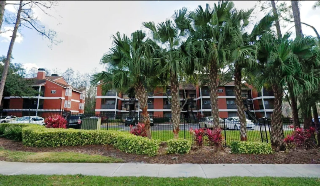
More than 65 homeowners at The Residences at Villa Medici
in west Orlando are demanding financial records and answers from their
condominium association after the board hit them with a special assessment
of between $5,000 and $10,000 per unit. The residents filed a lawsuit
against their homeowners association, and a judge has already stepped in to
halt collection of the fee while the case plays out.
|
|
Court proceedings also surfaced conflict-of-interest
allegations against board leadership. Per the same Fox 35 Orlando account,
the HOA director and treasurer served simultaneously as the property manager
and paid tens of thousands of dollars to his own company for trash
collection, along with more than $500,000 to a friend's maintenance firm,
without obtaining competitive bids. The director claimed hiring his own
company was a cost-saving measure, the report noted.
Bank Records Show Luxury Retail Spending
HOA bank records presented in court showed spending at luxury retailers
including Victoria's Secret, Burberry, and Macy's, the station reported. The
director claimed in court that some of those retail charges were fraudulent
and had been refunded.
A circuit judge has since ordered a halt to collection of the special
assessment, mandated an independent financial audit, and required Villa
Medici's HOA leaders to turn over financial records. Homeowners reported
that records were still being withheld as of the station's June coverage,
and attorneys are now pursuing contempt sanctions and board removal, the
outlet's report indicates.
New State Law Gives Owners Leverage
The dispute lands squarely inside a broader statewide reckoning over condo
governance. Florida House Bill 1021, which took effect in July 2024,
established criminal penalties for board members who repeatedly and
willfully withhold official records, while requiring associations to solicit
multiple third-party bids for contracts over $2,500 involving potential
conflicts of interest, according to the Florida Senate. That law is
precisely the kind of accountability tool Villa Medici owners are now
leaning on in court. According to DBPR Condominium Information & Resources,
legislation extended the deadline for completing the Structural Integrity
Reserve Study to December 31, 2025, easing the immediate financial burden on
affected condominium associations. According to MyFloridaLicense.com, a
Structural Integrity Reserve Study is a type of reserve study used to ensure
condo owners are reserving funds needed for future major repairs.
Central Florida condo owners have been squeezed hard in recent years by
post-Surfside reforms that eliminated reserve-waiving options for
associations. Orlando's Regency Gardens Condominiums, for instance, imposed
special assessments up to $22,104 per unit in May 2024 to cover a $17
million reserve shortfall, according to WFTV. Against that backdrop, Villa
Medici's $5,000-to-$10,000 assessment is smaller in dollar terms but has
drawn outsized scrutiny because of how it was pushed through.
The Residences at Villa Medici Condominium Association, Inc. has operated as
an active non-profit corporation registered at 5172 Conroy Road in Orlando
since January 2006, according to state corporate records from the Florida
Division of Corporations. The legal turmoil appears to be showing up in the
community's real estate market as well — MLS transaction data published by
Momentum Realty indicated that 6.25% of active property listings at Villa
Medici were in financial distress or short-sale status as of August 2026.
Hoodline has previously covered the legal rights of Florida condo owners
challenging developer and board control under Chapter 718, as well as the
broader wave of HOA cost increases hitting owners in Texas and Florida
markets alike. The Villa Medici case is now one of the more detailed
examples of how new state transparency laws are giving unit owners real
leverage against boards accused of opaque financial management.